mains · Chicken
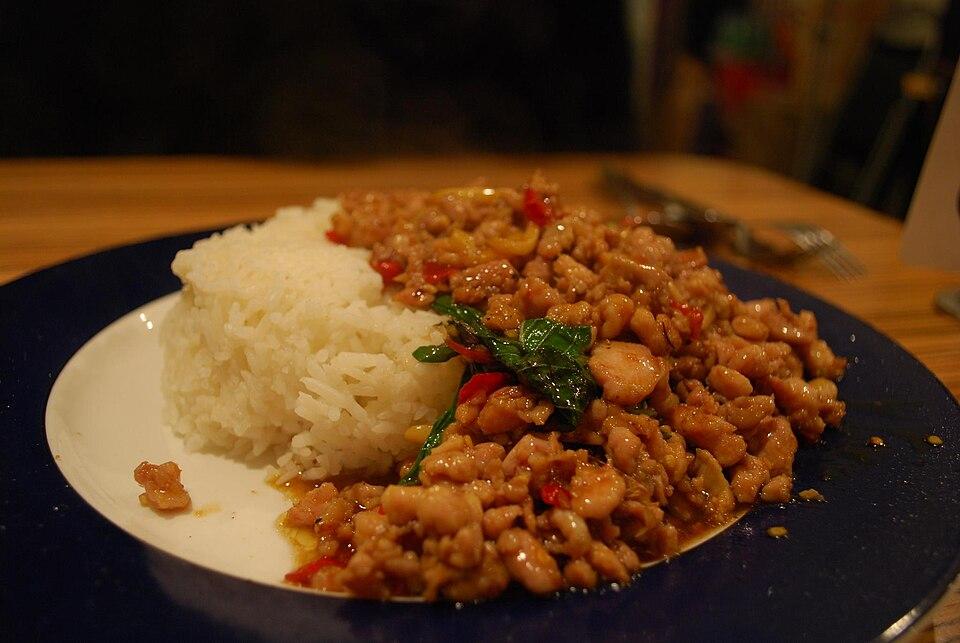
Thai Basil Chicken (Pad Krapow Gai)
Thai Basil Chicken (Pad Krapow Gai) — a main dish Ready in 20 minutes. Perfect for weeknight cooking. Quick and easy.
Nutrition (per serving)
380
Calories
35g
Protein
8g
Carbs
22g
Fat
2g
Fiber
Ingredients
Method
-
Prep the sauce. Mix oyster sauce, soy sauce, fish sauce, and sugar in a small bowl.
-
Heat the wok over high heat until smoking. Add oil. Add garlic, chiles, and shallots. Stir-fry for 30 seconds until fragrant.
Stir only when necessary. Constant stirring prevents browning and can break down ingredients that benefit from sustained heat contact.
-
Add the chicken. Spread it in a single layer and let it sear for 1 minute without stirring. Then stir-fry for 2 minutes, breaking up any clumps, until the chicken is cooked through and starting to crisp.
-
Add the sauce. Pour over the chicken and toss for 30 seconds until everything is coated and glossy.
Toss gently but thoroughly to coat every piece evenly. The goal is uniform seasoning and sauce distribution without breaking delicate ingredients.
-
Add the Thai basil. Toss for 15 seconds — just until the leaves wilt. Remove from heat immediately.
Toss gently but thoroughly to coat every piece evenly. The goal is uniform seasoning and sauce distribution without breaking delicate ingredients.
-
Serve over jasmine rice with a fried egg on top. The runny yolk is essential.
Serve immediately while the textures and temperatures are at their peak. Most dishes begin declining the moment they leave the heat — crispy things soften, sauces thicken, and aromatics fade.
Equipment
- Wok or large skillet Recommended: Joyce Chen 14-Inch Carbon Steel Wok
- Wok spatula or wooden spoon Also good: Wok Spatula
Chef Notes
- The most important thing: Mince the chicken by hand — don't use ground chicken. Hand-minced chicken has irregular texture that crisps up in the wok. Ground chicken is too uniform and turns into a paste. Partially freeze the thighs for 20 minutes to make chopping easier.
- The wok must be screaming hot. This is a 3-minute dish once you start cooking. High heat creates wok hei — the smoky, charred flavor that defines great stir-fry. Medium heat produces steamed, bland chicken.
- Thai basil is not the same as Italian basil. Thai basil has an anise-like flavor, sturdy leaves that hold up to heat, and purple stems. Italian basil wilts instantly and tastes different. If you can't find Thai basil, use Italian basil but add it at the very end.
- The sauce is simple: oyster sauce (sweet, savory), soy sauce (salty), fish sauce (umami), sugar (balance). These four ingredients create the complex flavor profile.
- This is pad kra pao — Thailand's most popular street food. It's always served with a fried egg on top. The runny yolk mixes with the sauce and rice.
Common Substitutions
| Ingredient | Substitution | Notes |
|---|---|---|
| Chicken thighs | Pork or tofu | Pork is equally traditional |
| Thai basil | Italian basil (add last second) | Different flavor — less anise |
| Thai chiles | Serrano or jalapeño | Less heat — adjust quantity |
| Oyster sauce | Hoisin sauce | Sweeter, less savory |
| Fish sauce | Soy sauce (double the amount) | Loses umami depth |
What You're Practicing
Thai basil chicken teaches you high-heat wok cooking — the fastest, most intense form of stovetop cooking. Everything happens in 3 minutes. You're learning to prep completely before the wok heats, to work in sequence (aromatics → protein → sauce → herbs), and to trust the heat. Visit Techniques for more on wok technique.
You're also learning the Thai flavor balance — sweet, salty, sour, and spicy in every dish. Adjusting these four elements by taste is the core skill of Thai cooking. Explore more at Techniques.
Video Resources
Some equipment and ingredient links are affiliate links. We earn a small commission at no extra cost to you. Learn more
Comments (0)
Sign in to commentNo comments yet. Be the first to share your thoughts.
Frequently Asked Questions
- Can I make Thai Basil Chicken (Pad Krapow Gai) ahead of time?
- Yes — prep the components up to a day ahead and store covered in the refrigerator. Reheat gently or bring to room temperature before serving.
- How do I store leftover Thai Basil Chicken (Pad Krapow Gai)?
- Store in an airtight container in the refrigerator for 3-4 days. Reheat gently over medium-low heat, adding a splash of broth or water to prevent drying out.
- Can I freeze Thai Basil Chicken (Pad Krapow Gai)?
- Yes — most cooked mains freeze well for up to 3 months. Cool completely, store in freezer-safe containers, and thaw overnight in the refrigerator before reheating.
- How many servings does this recipe make?
- This recipe serves 4. You can scale the ingredients up or down proportionally — use the Meal Plan servings slider to adjust the grocery list automatically.
- Is Thai Basil Chicken (Pad Krapow Gai) a quick recipe?
- Yes — this recipe is ready in 20 minutes including prep time, making it perfect for busy weeknights.
- Is Thai Basil Chicken (Pad Krapow Gai) dairy free and high protein and keto?
- Yes — this recipe is dairy free and high protein and keto. Check the Common Substitutions section for additional dietary adaptations.
- What substitutions can I make for Thai Basil Chicken (Pad Krapow Gai)?
- See the Common Substitutions section above for ingredient and equipment swaps with specific trade-off notes for each alternative.
You Might Also Like

Ackee and Saltfish
Jamaica''s national dish — creamy ackee fruit sautéed with salted cod.

Asian Chicken Lettuce Wraps
Asian chicken lettuce wraps with savory ground chicken, water chestnuts, and hoisin in butter lettuce.

Argentine Steak with Chimichurri
Grilled ribeye with Argentina's iconic chimichurri — raw herb sauce with red wine vinegar and garlic.

Bacalhau à Brás (Portuguese Salt Cod)
Shredded salt cod with crispy potatoes, scrambled eggs, and olives — Portugal's beloved comfort dish.