mains · Beef
Beef Carpaccio with Arugula and Parmesan
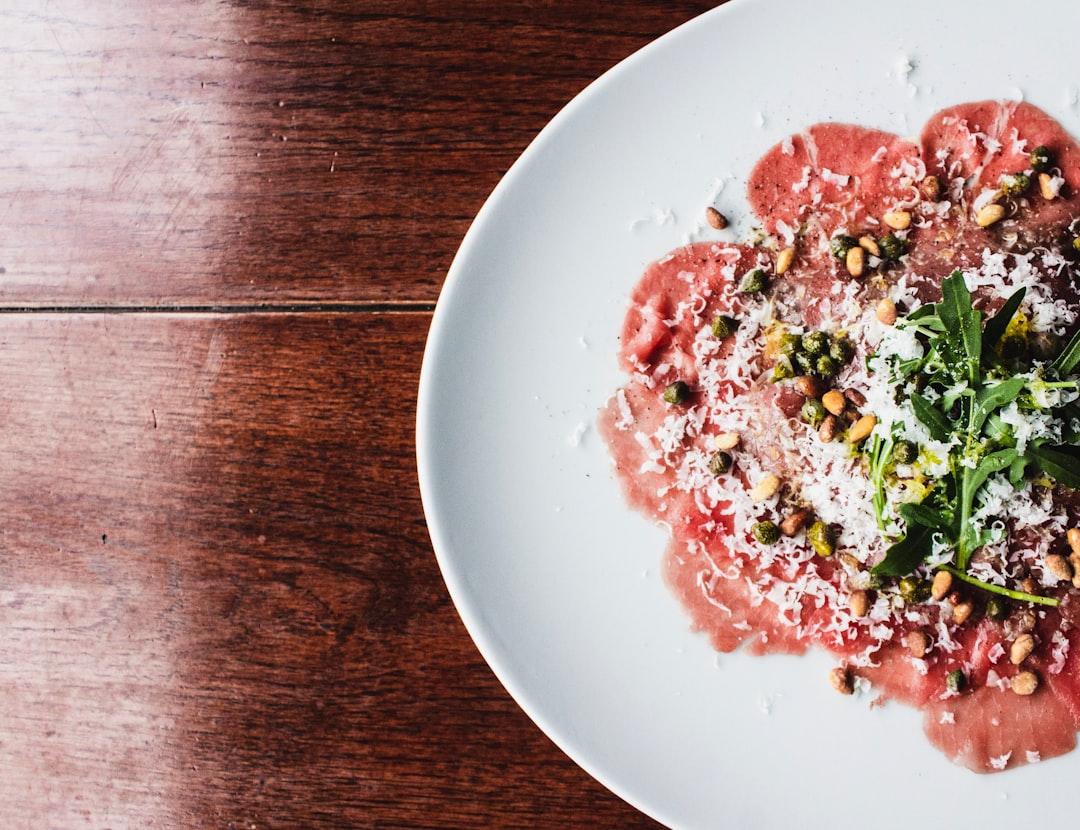
Paper-thin raw beef tenderloin with peppery arugula, shaved Parmesan, and lemon-caper dressing. Teaches precision slicing and raw meat handling.
Nutrition (per serving)
280
Calories
26g
Protein
4g
Carbs
18g
Fat
1g
Fiber
Ingredients
Method
-
Wrap the tenderloin tightly in plastic wrap, forming a compact cylinder. Place in the freezer for 30–45 minutes until firm but not frozen solid. You should be able to press a fingertip into it with effort — if it's rock hard, let it sit at room temperature for 5 minutes. The semi-frozen state is what allows paper-thin slicing.
-
Slice the beef as thin as physically possible — 1/16 inch or less. Use your sharpest knife and long, smooth strokes. Don't saw back and forth. Each slice should be translucent at the edges. If you can't get them thin enough, place each slice between two sheets of plastic wrap and gently pound with a rolling pin to flatten further.
-
Arrange the slices on chilled plates in a single layer, slightly overlapping. The beef should cover the entire plate with no gaps. Chill the plates in the refrigerator for 10 minutes before plating — cold plates keep the beef at a safe temperature longer.
-
Dress the carpaccio just before serving. Drizzle the olive oil in a thin stream over the beef, then squeeze the lemon juice over the top. The acid in the lemon juice very lightly "cooks" the surface of the beef — you'll see the color change slightly from deep red to a lighter pink at the edges.
-
Top with arugula, Parmesan shavings, and capers. Scatter the arugula in a loose mound in the center — don't flatten it. The height adds visual drama. Drape the Parmesan shavings over the arugula. Scatter the capers around the plate.
-
Finish with flaky sea salt and cracked pepper. Serve immediately — carpaccio doesn't hold. The beef warms and oxidizes quickly, losing its vibrant color and clean flavor within 15 minutes.
Equipment
- Very sharp knife (the sharpest you have) Recommended: Victorinox Fibrox Pro 8-Inch Chef's Knife · Also good: Victorinox Fibrox Pro 8-Inch Chef's Knife
- Cutting board Recommended: John Boos Maple Edge-Grain Cutting Board 18x12
- Plastic wrap
- Vegetable peeler (for Parmesan shavings)
Chef Notes
- The most important thing: The beef must be sashimi-grade quality from a trusted butcher. This is raw beef — freshness is a food safety requirement, not a preference. Tell your butcher you're making carpaccio and they'll select the right piece.
- Freeze the tenderloin for 30–45 minutes before slicing. Semi-frozen beef slices paper-thin with a sharp knife. Fully thawed beef squishes and tears. You want slices thin enough to almost see through.
- Use the best olive oil you own. In a raw preparation with four ingredients, every component is exposed. Cheap olive oil tastes like cheap olive oil. This is where your good bottle earns its price.
- Parmigiano-Reggiano, not generic Parmesan. Shave it with a vegetable peeler for thin, wide curls that drape over the beef.
- Carpaccio was invented at Harry's Bar in Venice in 1950. It's named after the painter Vittore Carpaccio, known for his use of red and white. The dish should look like art on the plate.
Common Substitutions
| Ingredient | Substitution | Notes |
|---|---|---|
| Beef tenderloin | Sushi-grade tuna or salmon | Completely different dish but same technique — slice thin, dress simply |
| Arugula | Watercress or frisée | Watercress has a similar peppery bite |
| Parmigiano-Reggiano | Pecorino Romano | Sharper and saltier — use less |
| Capers | Cornichons, finely sliced | Different but adds the same briny, acidic contrast |
| Lemon juice | White truffle oil (a few drops) | Luxurious upgrade — use in addition to, not instead of, lemon |
What You're Practicing
Carpaccio teaches you the art of raw preparation — where knife skills, ingredient quality, and restraint matter more than cooking technique. There's nowhere to hide in a dish with four ingredients and no heat. This same philosophy applies to sashimi, crudo, tartare, and ceviche. Visit Techniques for more on raw preparations.
You're also practicing plating as a skill — arranging food on a plate for visual impact. The overlapping beef, the height of the arugula, the scattered capers and Parmesan curls — this is composed plating at its simplest. Explore more at Techniques.
Video Resources
Some equipment and ingredient links are affiliate links. We earn a small commission at no extra cost to you. Learn more
Comments (0)
Sign in to commentNo comments yet. Be the first to share your thoughts.
Frequently Asked Questions
- Can I make Beef Carpaccio with Arugula and Parmesan ahead of time?
- Yes — prep the components up to a day ahead and store covered in the refrigerator. Reheat gently or bring to room temperature before serving.
- How do I store leftover Beef Carpaccio with Arugula and Parmesan?
- Store in an airtight container in the refrigerator for 3-4 days. Reheat gently over medium-low heat, adding a splash of broth or water to prevent drying out.
- Can I freeze Beef Carpaccio with Arugula and Parmesan?
- Yes — most cooked mains freeze well for up to 3 months. Cool completely, store in freezer-safe containers, and thaw overnight in the refrigerator before reheating.
- How many servings does this recipe make?
- This recipe serves 4. You can scale the ingredients up or down proportionally — use the Meal Plan servings slider to adjust the grocery list automatically.
- Is Beef Carpaccio with Arugula and Parmesan a quick recipe?
- Yes — this recipe is ready in 20 minutes including prep time, making it perfect for busy weeknights.
- Is Beef Carpaccio with Arugula and Parmesan gluten free and high protein and keto?
- Yes — this recipe is gluten free and high protein and keto. Check the Common Substitutions section for additional dietary adaptations.
- Is this an authentic Italian recipe?
- This recipe follows traditional Italian techniques and ingredients. The Chef Notes section explains any adaptations for home kitchen accessibility and suggests authentic alternatives where substitutions are made.
- What substitutions can I make for Beef Carpaccio with Arugula and Parmesan?
- See the Common Substitutions section above for ingredient and equipment swaps with specific trade-off notes for each alternative.
You Might Also Like

Ackee and Saltfish
Jamaica''s national dish — creamy ackee fruit sautéed with salted cod.

Argentinian Churrasco
Argentinian churrasco — thick-cut grilled steak with chimichurri. Simple fire, great beef, nothing else.

Argentine Steak with Chimichurri
Grilled ribeye with Argentina's iconic chimichurri — raw herb sauce with red wine vinegar and garlic.

Asian Chicken Lettuce Wraps
Asian chicken lettuce wraps with savory ground chicken, water chestnuts, and hoisin in butter lettuce.