sides · appetizer
Chawanmushi (Japanese Savory Egg Custard)
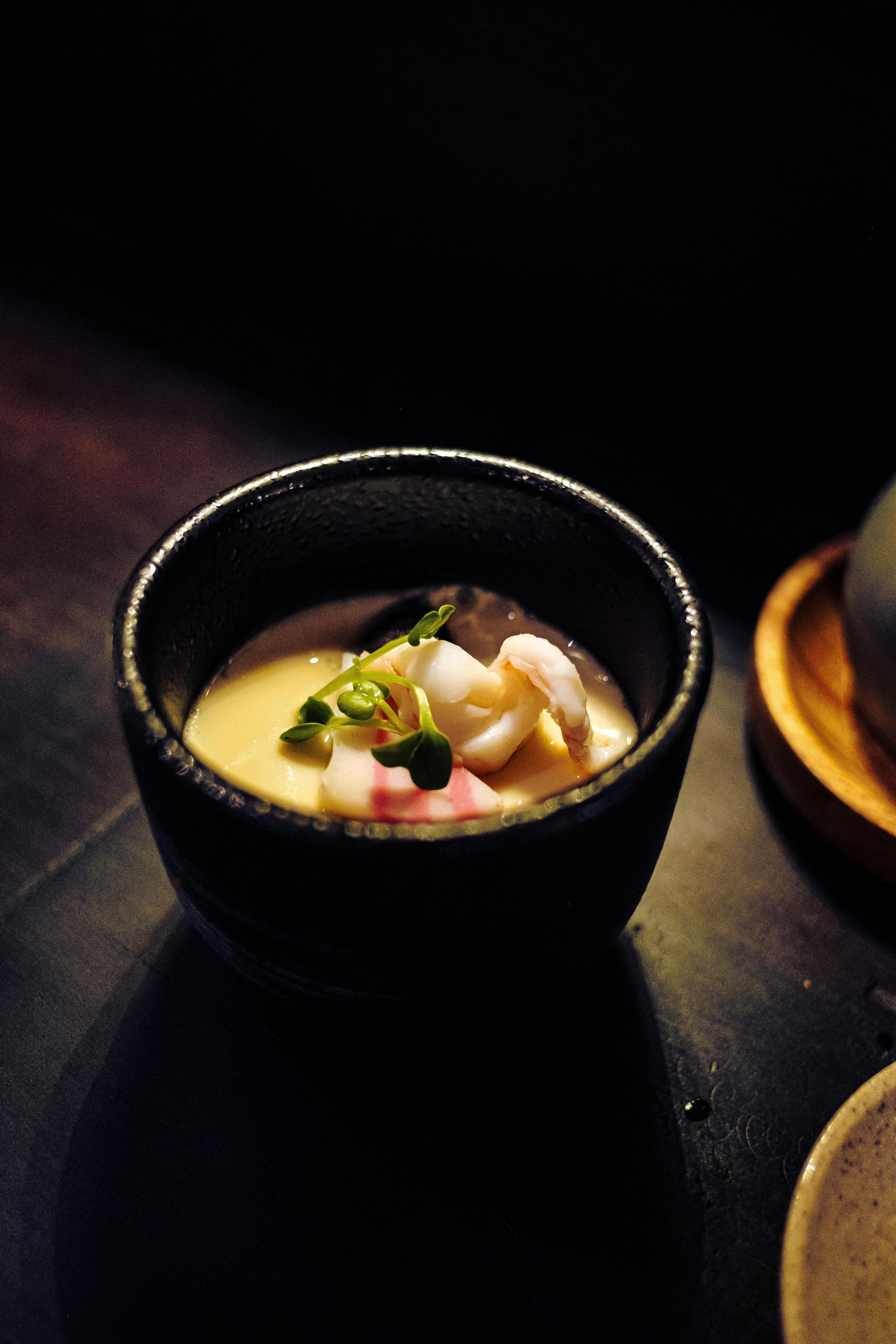
Chawanmushi — a silky Japanese steamed egg custard with shrimp, chicken, and mushroom hidden inside.
Nutrition (per serving)
120
Calories
12g
Protein
3g
Carbs
6g
Fat
0g
Fiber
Ingredients
For the custard:
For the fillings (divide among 4 cups):
Method
-
Make the custard base. Beat the eggs gently in a bowl — you want them combined but not frothy. Whipping introduces air bubbles that create holes in the finished custard. Add the cooled dashi, soy sauce, mirin, and salt. Stir gently to combine. The ratio is critical: 1 egg to 1/2 cup dashi produces a custard that's barely set, trembling like silk. More egg makes it firmer; more dashi makes it softer.
-
Strain the custard through a fine-mesh strainer into a clean bowl or measuring cup. This removes any chalazae (the white stringy bits from the eggs) and any bubbles. A smooth custard base produces a flawless, mirror-smooth surface. This straining step is the difference between home chawanmushi and restaurant chawanmushi.
-
Prepare the fillings. Season the shrimp and chicken pieces with a tiny pinch of salt. Divide the fillings among 4 chawanmushi cups, small ramekins, or teacups — place the chicken and mushrooms on the bottom (they need the most cooking), shrimp in the middle, and kamaboko near the top.
-
Pour the strained custard gently over the fillings, filling each cup about 80% full. The fillings will float slightly — that's fine. If there are any surface bubbles, pop them with a toothpick or gently blow on them. Every bubble becomes a crater in the finished custard.
-
Cover each cup tightly with foil or a small lid. The cover prevents condensation from dripping onto the custard surface, which would create pockmarks. Place the cups in a steamer basket over simmering water.
-
Steam on high for 2 minutes, then reduce to low for 12-15 minutes. The initial burst of high heat sets the outer layer; the gentle low heat cooks the interior without boiling. If the water boils aggressively, the custard develops bubbles and a rough texture — the Japanese call this "su ga tatsu" (holes forming), and it's the most common mistake. The custard is done when it jiggles like set gelatin when gently shaken — firm at the edges, trembling in the center.
-
Garnish with mitsuba or parsley and serve immediately. Chawanmushi is eaten with a small spoon, starting from the top. The joy is discovering the hidden fillings as you eat deeper into the custard — each spoonful reveals something different. In kaiseki dining, chawanmushi often appears as the futamono (lidded dish) course, and the moment of lifting the lid to reveal the pristine custard is part of the experience.
Equipment
- Steamer basket or large pot with a rack Recommended: OXO Good Grips Stainless Steel Steamer
- Fine-mesh strainer Recommended: Winco 8-Inch Stainless Steel Fine Mesh Strainer
- 4 chawanmushi cups, ramekins, or teacups
- Foil or small lids
Chef Notes
- The most important thing: Don't let the water boil during steaming. A gentle simmer produces silky custard; a rolling boil produces a custard full of holes. Control the heat.
- The egg-to-dashi ratio (1:2.5 by volume) is the key to the texture. This produces a custard that barely holds together — much softer than a Western quiche or flan. Don't add more egg thinking it needs to be firmer.
- Cool the dashi before mixing with eggs. Hot dashi scrambles the eggs and creates lumps.
- Chawanmushi is served warm, not hot. Let it rest for 2 minutes after steaming — the residual heat finishes the center.
- The fillings are traditional but flexible. Crab, scallops, lily bulb, and seasonal vegetables all appear in kaiseki versions.
Common Substitutions
| Ingredient | Substitution | Notes |
|---|---|---|
| Dashi stock | Chicken broth (light) | Different flavor profile but produces a good custard |
| Shrimp | Crab meat or scallop | Both are traditional kaiseki fillings |
| Shiitake | Enoki or maitake mushrooms | Different texture, equally good |
| Mitsuba | Flat-leaf parsley or chervil | Mitsuba has a unique celery-parsley flavor |
| Ginkgo nuts | Omit | Traditional but hard to find — the custard is complete without them |
What You're Practicing
Chawanmushi teaches the art of steamed custard — controlling heat to produce a texture so delicate it trembles on the spoon. This same technique applies to French crème caramel, Chinese steamed egg, and Korean gyeran-jjim. The universal principle is the same: gentle heat, no boiling, and patience. Visit Stocks for more on building dashi as a custard base.
The straining and bubble-removal steps teach the Japanese obsession with surface perfection — a concept that applies to any custard, sauce, or soup where visual smoothness matters. In kaiseki, the appearance of a dish is as important as its flavor. Visit Techniques for more on precision techniques.
Some equipment and ingredient links are affiliate links. We earn a small commission at no extra cost to you. Learn more
Comments (0)
Sign in to commentNo comments yet. Be the first to share your thoughts.
Frequently Asked Questions
- Can I make Chawanmushi (Japanese Savory Egg Custard) ahead of time?
- Yes — prep the components up to a day ahead and store covered in the refrigerator. Reheat gently or bring to room temperature before serving.
- How do I store leftover Chawanmushi (Japanese Savory Egg Custard)?
- Store in an airtight container in the refrigerator for 3-4 days. Most sides reheat well in the oven at 350°F for 10-15 minutes.
- Can I freeze Chawanmushi (Japanese Savory Egg Custard)?
- Most cooked sides freeze well for 2-3 months. Soups and stews freeze especially well. Avoid freezing dishes with high dairy content — they can separate when thawed.
- How many servings does this recipe make?
- This recipe serves 4. You can scale the ingredients up or down proportionally — use the Meal Plan servings slider to adjust the grocery list automatically.
- Is Chawanmushi (Japanese Savory Egg Custard) gluten free and dairy free?
- Yes — this recipe is gluten free and dairy free. Check the Common Substitutions section for additional dietary adaptations.
- Is this an authentic Japanese recipe?
- This recipe follows traditional Japanese techniques and ingredients. The Chef Notes section explains any adaptations for home kitchen accessibility and suggests authentic alternatives where substitutions are made.
- What substitutions can I make for Chawanmushi (Japanese Savory Egg Custard)?
- See the Common Substitutions section above for ingredient and equipment swaps with specific trade-off notes for each alternative.
You Might Also Like

Baba Ganoush
Baba ganoush with charred eggplant and tahini — smoky, creamy, and deeply savory.

Baked Sweet Potato Fries
Baked sweet potato fries with a cornstarch coating for crispy edges and sriracha mayo for dipping.

Bigos (Polish Hunter's Stew)
Bigos — Poland's national stew of sauerkraut, fresh cabbage, and smoked meats. Better every day it sits.

Braised Collard Greens
Braised collard greens slow-simmered with bacon, vinegar, and chicken stock until silky tender.