Chapters
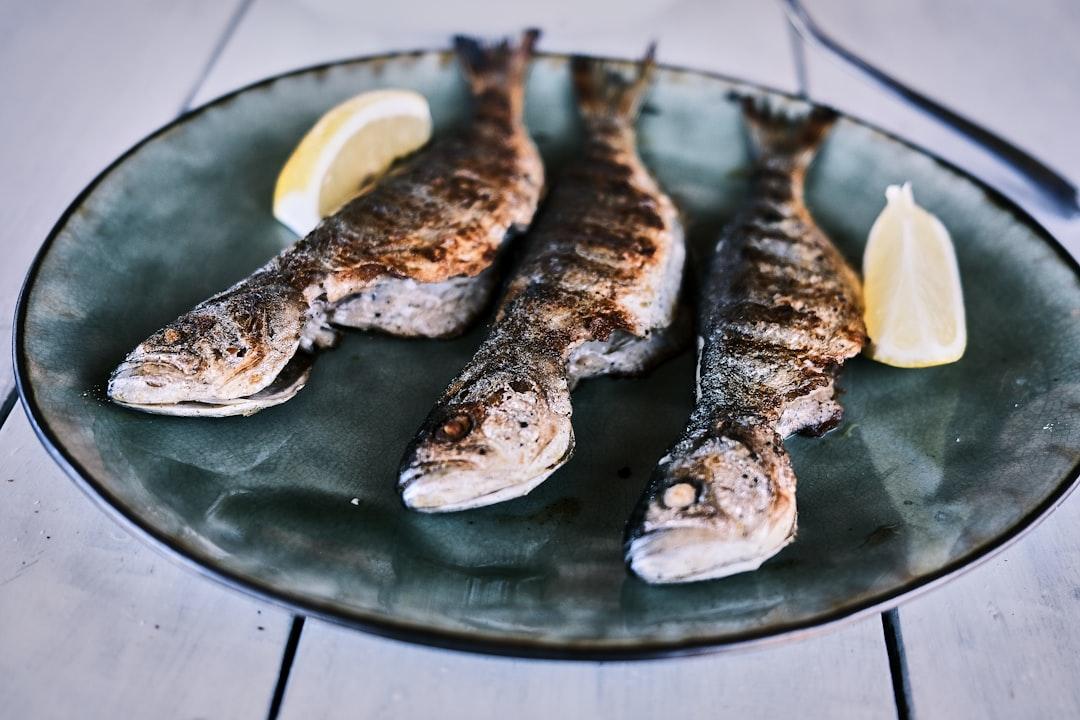
Grilled Whole Branzino with Lemon and Herbs
A whole fish grilled over direct heat — crispy skin, moist flesh, stuffed with lemon and herbs. Teaches the most intimidating grilling skill: fish that doesn't stick.
Nutrition (per serving)
320
Calories
38g
Protein
2g
Carbs
16g
Fat
0g
Fiber
A whole fish grilled over direct heat — crispy skin, moist flesh, stuffed with lemon and herbs. Teaches the most intimidating grilling skill: fish that doesn't stick.
Ingredients
- 2 whole branzino (about 1 lb each), scaled and gutted
- 3 tbsp olive oil
- 1 lemon, thinly sliced
- 4 sprigs fresh thyme
- 4 sprigs fresh rosemary
- 4 cloves garlic, smashed
- Salt and pepper
- Extra lemon wedges and olive oil for serving
- Salsa verde or chimichurri (optional)
Method
-
Score the fish: make 3 diagonal slashes on each side, about 1/4-inch deep. This helps heat penetrate evenly and prevents the skin from curling.
-
Season inside and out with salt and pepper. Stuff the cavity with lemon slices, herbs, and garlic. Brush the outside generously with olive oil.
-
Preheat grill to high (500°F+). Clean the grates thoroughly with a wire brush, then oil them: fold a paper towel, dip in oil, and rub across the hot grates using tongs. Repeat 3 times. This is the most important step for preventing sticking.
-
Place fish on the grill at a 45-degree angle to the grates. Do not move it for 4-5 minutes. The skin will release naturally when it's ready — if it sticks, it needs more time.
-
Carefully flip using two spatulas (one under the head, one under the tail). Grill the second side 4-5 minutes until the flesh is opaque and flakes easily when tested with a knife tip near the backbone.
-
Transfer to a platter. Drizzle with olive oil and serve with lemon wedges. To serve, run a knife along the backbone, lift the top fillet off, remove the skeleton, and serve the bottom fillet.
What You're Practicing
What You're Practicing
Preventing sticking: Fish sticks to the grill because proteins bond to metal at high heat. Three things prevent this: a screaming hot grate (proteins sear before they can bond), a well-oiled grate (oil creates a barrier), and patience (the fish releases when the crust forms — don't force it). This same principle applies to any protein on the grill.
Whole fish technique: Cooking fish whole (bone-in, skin-on) is more forgiving than fillets because the bones insulate the flesh and the skin protects it from direct flame. The result is moister, more flavorful fish. The cavity stuffing steams from inside, infusing the flesh with aromatics.
Scoring: The slashes serve three purposes — they allow heat to penetrate the thickest part of the fish, they let the seasoning reach the flesh beneath the skin, and they prevent the skin from contracting and curling the fish into a C-shape.
Doneness: Fish is done when the flesh near the backbone is opaque and separates easily from the bone. For whole fish, this is around 135-140°F internal. Unlike chicken, fish does not need to reach 165°F — the FDA recommends 145°F, but many chefs prefer 130-135°F for moist, flaky results.
Comments (0)
No comments yet. Be the first to share your thoughts.