Chapters
Classic Quiche Lorraine
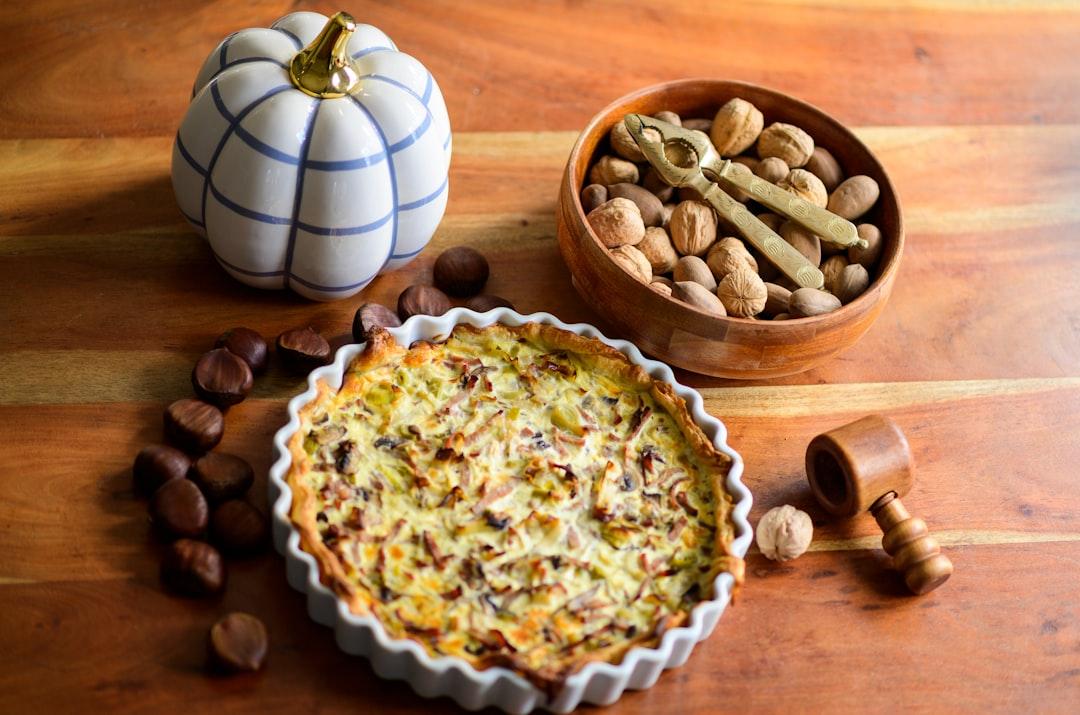
The original quiche — smoky bacon, Gruyère, and a silky egg custard in a buttery pâte brisée shell. Teaches the custard ratio every cook should memorize.
Nutrition (per serving)
420
Calories
16g
Protein
22g
Carbs
30g
Fat
1g
Fiber
The original quiche — smoky bacon, Gruyère, and a silky egg custard in a buttery pâte brisée shell. Teaches the custard ratio every cook should memorize.
Ingredients
- 1 recipe pâte brisée (pie dough), blind-baked in a 9-inch tart pan
- 6 slices thick-cut bacon, cut into lardons
- 1 medium onion, thinly sliced
- 4 large eggs
- 1.5 cups heavy cream
- 1/2 cup whole milk
- 1/4 tsp freshly grated nutmeg
- 1/2 tsp salt
- Pinch of white pepper
- 1 cup grated Gruyère cheese
- 1 tbsp fresh thyme leaves
Method
-
Blind-bake the tart shell: Line the dough with parchment and fill with pie weights or dried beans. Bake at 375°F for 15 minutes. Remove weights and parchment, bake 5 more minutes until light golden. Reduce oven to 325°F.
-
Cook bacon lardons in a skillet over medium heat until crispy, about 6 minutes. Remove bacon. Add onion to the bacon fat and cook 5 minutes until soft. Drain on paper towels.
-
Whisk together eggs, cream, milk, nutmeg, salt, and pepper. This is the custard base — the ratio to memorize is 1 egg to roughly 1/2 cup liquid. This produces a silky, just-set custard that trembles when you shake the pan.
-
Scatter bacon, onion, and half the Gruyère into the blind-baked shell. Pour the custard mixture over the top. Sprinkle remaining Gruyère and thyme on top.
-
Bake at 325°F for 35-40 minutes until the custard is set around the edges but still has a gentle wobble in the center (about a 2-inch circle of jiggle). It will continue to set as it cools.
-
Let cool at least 20 minutes before slicing. Quiche is best served warm or at room temperature, not hot — the custard needs time to firm up for clean slices.
What You're Practicing
What You're Practicing
The custard ratio: 1 egg to 1/2 cup dairy (cream, milk, or a combination) is the universal savory custard ratio. Memorize it and you can make any quiche without a recipe — swap the fillings, keep the ratio. More cream = richer and silkier. More milk = lighter and more delicate.
Blind baking: Pre-baking the crust prevents a soggy bottom. The weights keep the dough from puffing up. The second bake without weights dries out the surface so it can hold the wet custard without getting soggy.
Low oven temperature: Custards curdle (become grainy and weep liquid) when cooked too hot. 325°F is the sweet spot — hot enough to set the eggs, cool enough to keep the texture smooth. This same principle applies to crème brûlée, flan, and any baked custard.
The wobble test: The center should jiggle like Jell-O when you gently shake the pan. If it looks liquid, it needs more time. If it doesn't wobble at all, it's overcooked. The carryover cooking will firm up that wobbly center into a perfect, just-set custard.
Variations: Once you master Lorraine, try: spinach and feta, caramelized onion and goat cheese, mushroom and Gruyère, smoked salmon and dill, or roasted red pepper and chorizo. The custard base stays the same.
Comments (0)
No comments yet. Be the first to share your thoughts.